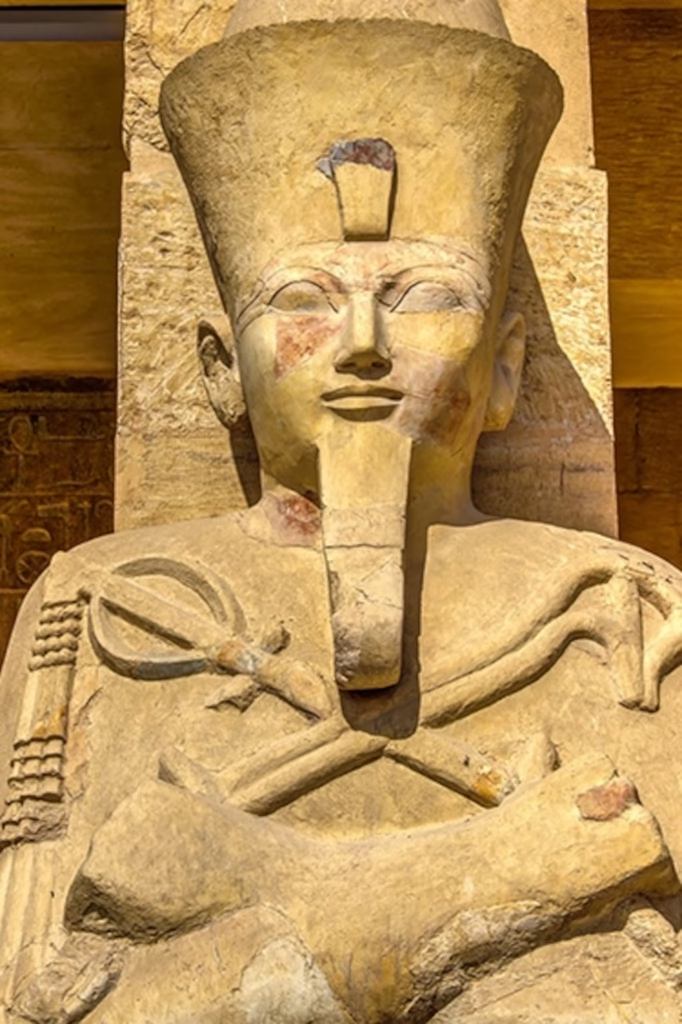
Queen Hatshepsut (c. 1505–1458 BCE) became one of ancient Egypt’s most influential rulers. Originally regent for her young stepson Thutmose III, she declared herself pharaoh around 1479 BCE and ruled Egypt for over two decades with prosperity and cultural flourishing.
Why Hatshepsut Stands Out
-
Female King, Full Authority: She adopted traditional male regalia and royal titulary to affirm her legitimacy as a pharaoh.
-
Architectural Masterpiece: Her crowning achievement is the Mortuary Temple at Deir el-Bahri (Djeser‑Djeseru), terraced against the cliffs west of Luxor.
-
Economic Expansion: Sponsored a major maritime expedition to Punt, bringing back exotic incense, gold, and exotic animals, boosting Egypt’s wealth.
-
Attempted Erasure: After her death, Thutmose III had her monuments defaced and name removed from records—an effort to erase her historical presence.
-
1. Early Life & Rise to Power
Daughter of Thutmose I and Queen Ahmose, Hatshepsut married Thutmose II. Upon his death, she became regent for her stepson and later assumed full pharaonic power.
2. Grand Building Projects
She commissioned major works: two obelisks at Karnak, the Red Chapel, the Speos Artemidos shrine, and especially her iconic temple Djeser‑Djeseru by Senenmut.
3. Trade & Prosperity
Her expedition to Punt—via the Red Sea—founded new trade routes yielding myrrh, incense, gold, animals, and wood. These assets financed her temples and art initiatives.
4. Legacy & Myth
Egyptian priests later attempted to remove her from temple walls and chronologies. Rediscovery in the 19th century restored her place in history as a transformative female ruler.
- Queen Hatshepsut shattered gender expectations, built enduring monuments, expanded trade, and left a legacy nearly erased by political rivals—but revived by modern archaeology. Her reign is a remarkable chapter in Egyptian—and female—leadership history.