For the discerning Japanese traveller, a trip to Egypt is far more than a simple vacation. It is a profound, deeply spiritual journey to the very beginning of human history and cultural identity. In Japan, society places an immense value on the preservation of heritage, ancestral respect, and the meticulous care of national treasures. This deep cultural foundation allows Japanese visitors to truly appreciate the grand monuments of the pharaohs, which have stood against the sands of time for thousands of years. As you explore this fascinating country, there is no better time to experience the architectural wonders of the ancient world.
Abu Simbel Temple stands as the ultimate masterpiece of ancient Egyptian power, art, and divine kingship. Located in the majestic desert landscape of southern Nubia, near the border of modern Egypt, this breathtaking monument offers an elite travel experience that perfectly balances historical education with awe-inspiring beauty. For our valued guests from Japan, who deeply value punctuality, absolute safety, flawless organisation, and the true spirit of Omotenashi (heartfelt hospitality), exploring this specific monument offers a deeply fulfilling, life-changing adventure that resonates with the concept of Monozukuri—supreme pride in master craftsmanship and technical perfection.
At Egypt Escape Travel, we specialize in transforming your historic dreams into a seamless, highly comfortable reality. We know that travelling through the vast landscapes of Upper Egypt requires expert logistical planning, premium private transportation, and insightful guidance in your native language. This massive, comprehensive guide is carefully crafted to serve as your ultimate manual for exploring the great sun temples of Ramses II, ensuring your premium summer journey is relaxing, deeply educational, and completely unforgettable.
Abu Simbel Temple: 1. The Divine Vision and Reign of Pharaoh Ramses II.
Abu Simbel Temple was carved directly out of a solid sandstone cliff during the magnificent 19th Dynasty of the New Kingdom, around 1264 BCE. This colossal monument was envisioned by Pharaoh Ramses II, who is widely considered the greatest, most powerful, and most ambitious builder in the history of ancient Egypt. He ruled for an astonishing 66 years, a period marked by massive military victories, incredible economic wealth, and the construction of monumental architecture that was designed to project his supreme power across the ancient world.
The great temple complex was not merely a civic building; it was a sacred sanctuary dedicated to the most powerful gods of the Egyptian empire: Ra-Horakhty (the sun god of the east), Amun (the king of the gods), and Ptah (the god of creation and craftsmen). Most importantly, Ramses II included his own deified image among these supreme gods, establishing himself as a living god on earth to secure his eternal legacy. For Japanese travellers who possess a deep historical curiosity, stepping inside this ancient temple provides a fascinating look into the complex political and religious philosophy that governed the ancient Nile valley.
Abu Simbel Temple: 2. The Architectural Grandeur of the Four Colossal Statues
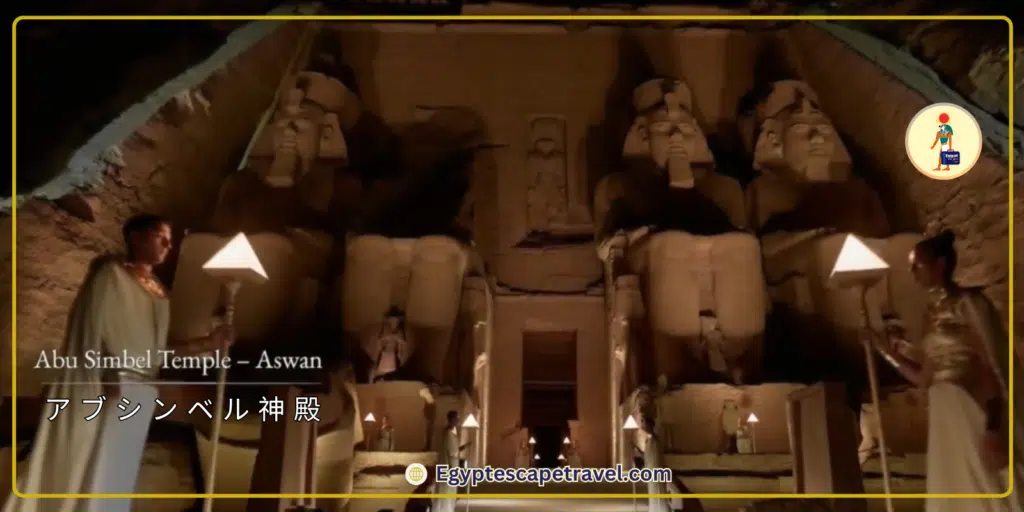
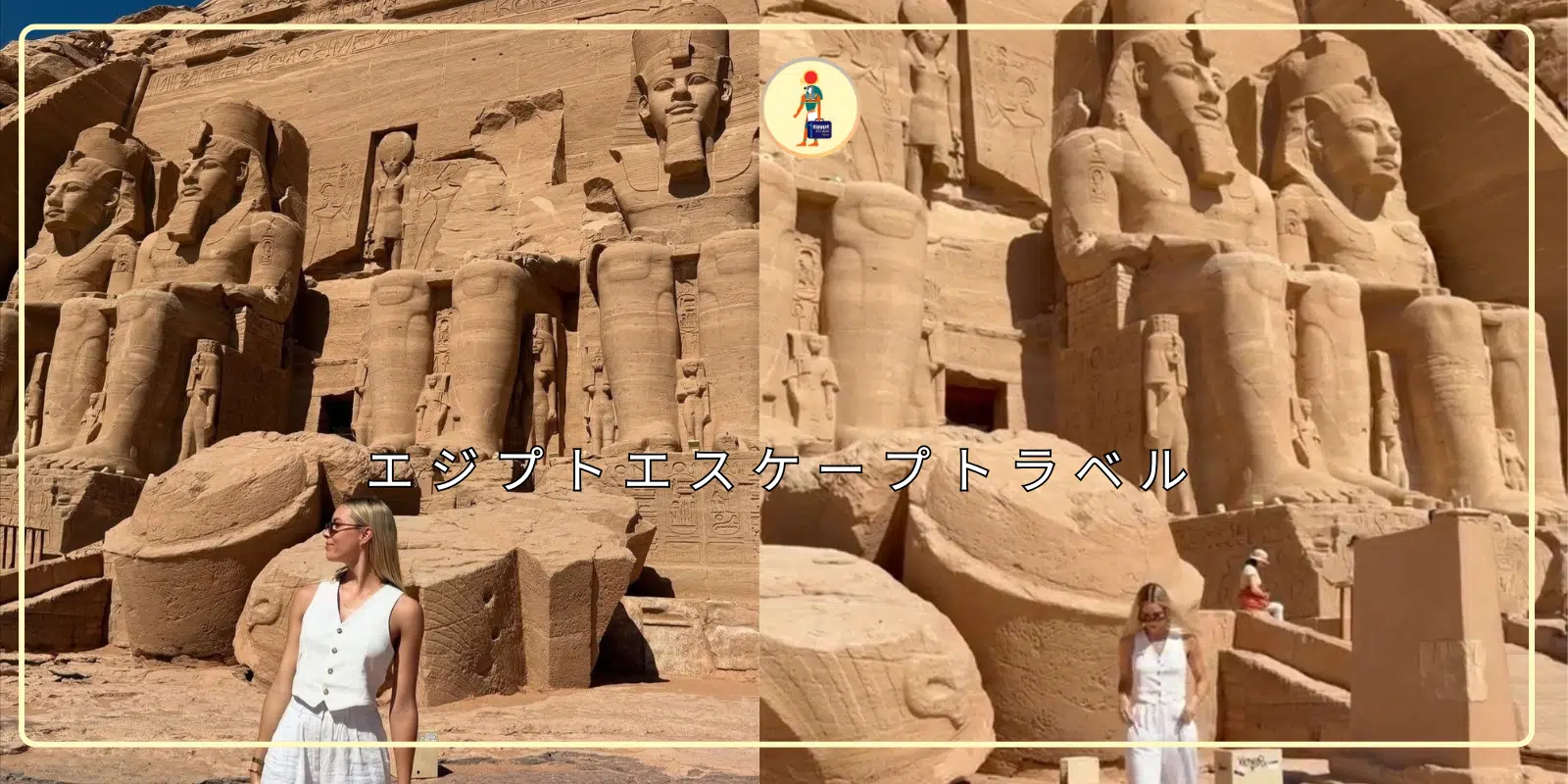
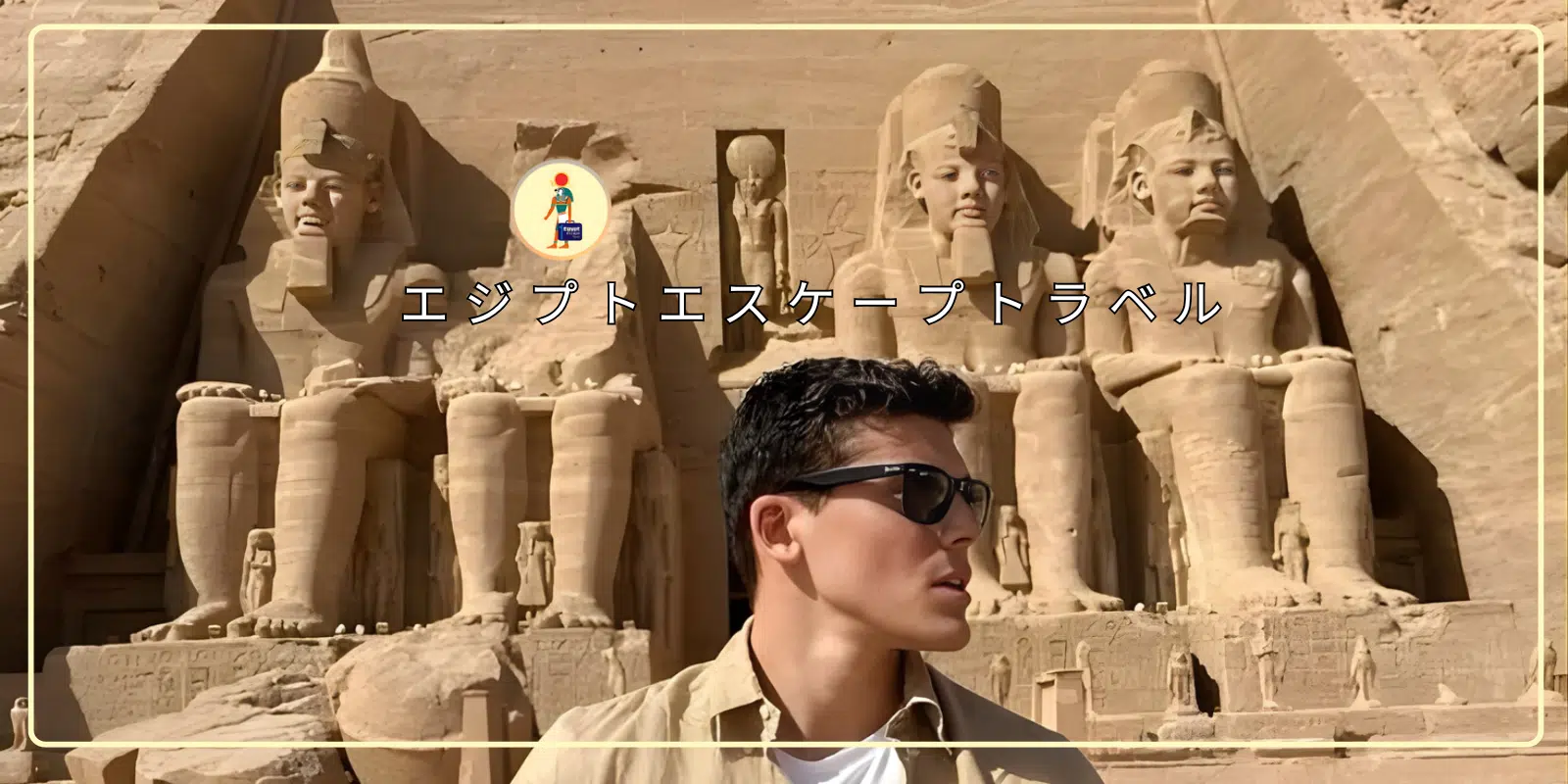
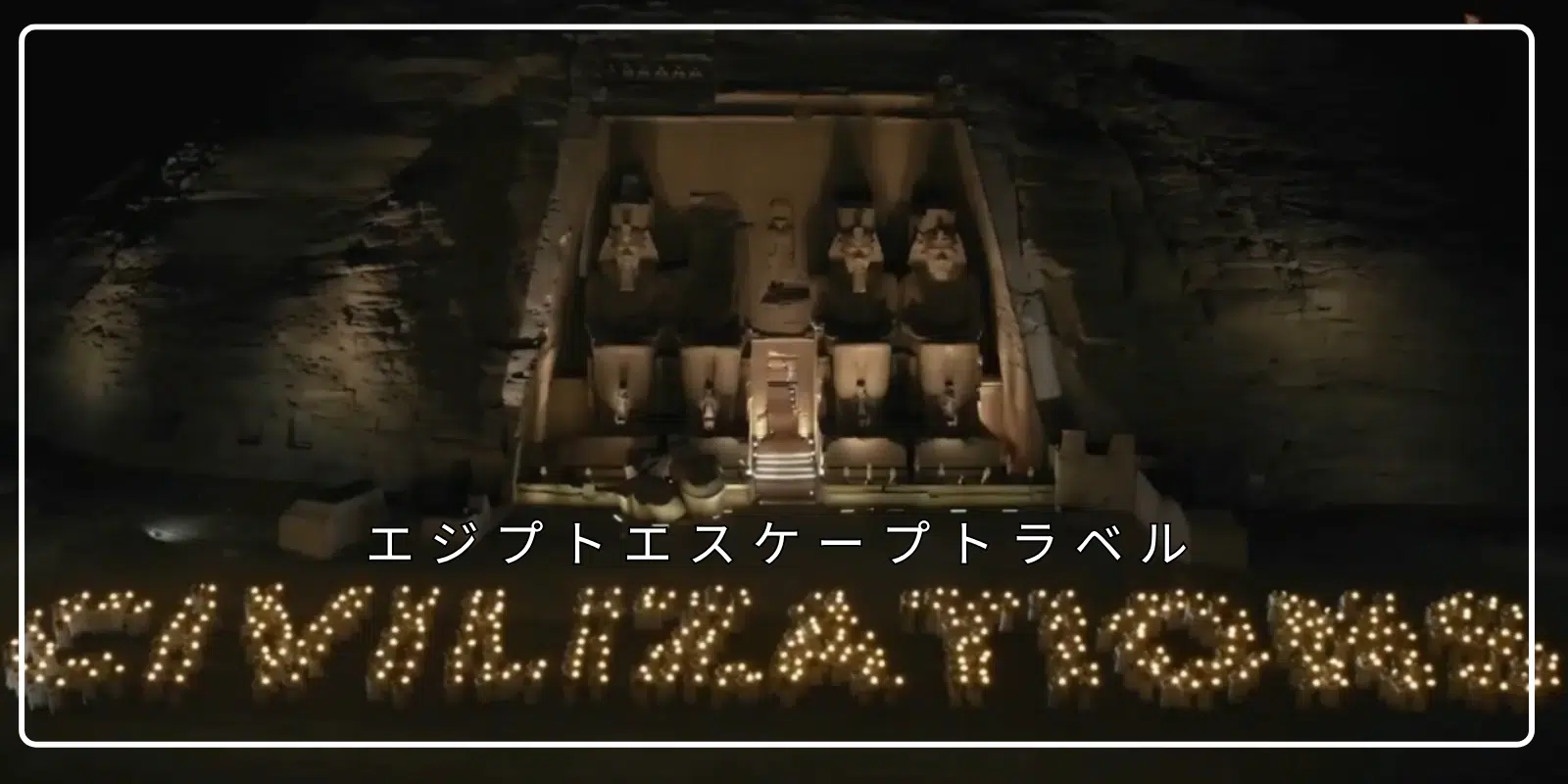
Abu Simbel Temple welcomes visitors with one of the most iconic, awe-inspiring facades in human history. Four colossal, seated statues of Ramses II, each standing at a majestic height of over 20 meters, dominate the front of the Great Temple. These giant figures were carved directly from the living rock of the mountain, showcasing a level of artistic precision and scale that leaves modern engineers completely speechless. Each statue depicts the pharaoh wearing the double crown of Upper and Lower Egypt, symbolizing his total rule over the unified nation.
As you stand before these giant monuments, the sheer scale of the statues reflects a profound devotion to architectural perfection that mirrors the artistic values found in Japan’s own monumental national treasures, such as the Great Buddha of Nara. Although one of the statues was severely damaged by a powerful earthquake in ancient times, its fallen upper torso still rests on the ground before the temple facade, serving as a moving historical reminder of the natural forces the temple has survived over thousands of years.
Abu Simbel Temple: 3. The Artistic Masterpieces Hidden Inside the Great Hypostyle Hall
Abu Simbel Temple continues to amaze visitors as they step through the main entrance into the dark, cool interior of the mountain. The first major room is the magnificent Hypostyle Hall, which features eight massive pillars carved in the likeness of the god Osiris, each bearing the facial features of Ramses II. The walls of this grand hall are covered in incredibly detailed, deeply carved relief paintings that depict the pharaoh’s grand military achievements and his intimate interactions with the divine world.
The most famous interior artwork describes the legendary Battle of Kadesh, where Ramses II fought bravely against the Hittite Empire. The reliefs show the pharaoh charging into battle on his royal chariot, shooting arrows at his enemies, and standing proudly as a victorious leader. For the refined Japanese traveller, observing the preservation of these 3,000-year-old carvings is a deeply moving experience, highlighting a level of ancient dedication to detail, storytelling, and artistic discipline that transcends time and geography.
Abu Simbel Temple: 4. The Microscopic Precision of the Sacred Inner Sanctuary
Abu Simbel Temple holds its most profound secret at the very back of the mountain, inside the small, sacred room known as the Inner Sanctuary. Located completely in darkness under millions of tons of solid rock, this room contains four seated statues: the god Ptah, the god Amun-Ra, the deified Ramses II, and the god Ra-Horakhty. The placement of these statues demonstrates the incredible astronomical and mathematical genius of the ancient Egyptian architects and astronomers.
Twice every year, on specific dates, a spectacular natural phenomenon occurs that draws crowds from all over the world. The ancient architects designed the temple tunnel so perfectly that the morning sunbeams travel exactly 60 meters deep into the mountain to illuminate the statues of Ra-Horakhty, Amun-Ra, and Ramses II with brilliant golden light. This breathtaking event showcases a mastery of solar alignment and sacred geometry that commands the deepest respect from modern scientists and international visitors alike.
Abu Simbel Temple: 5. The Legendary Mystery of the Annual Sun Festival Dates
Abu Simbel Temple celebrates this solar phenomenon during the world-famous Sun Festival, which takes place annually on February 22 and October 22. According to historical scholars, these specific dates were deliberately chosen by ancient astronomers to mark two major milestones in the life of Ramses II: his official birthday and the grand anniversary of his coronation as Pharaoh. During these festival mornings, the dark sanctuary is filled with a warm, celestial glow that brings the ancient stone statues to life.
Interestingly, the sun god illuminates only three of the four figures. The statue of Ptah, who is the ancient god of the underworld and darkness, is intentionally left in the shadows, never receiving the direct touch of the sunbeams. For Japanese tourists who appreciate deep spiritual philosophy, complex mythology, and cosmic harmony, witnessing or learning about this ancient event highlights the deep connection the Egyptians felt between the movements of the universe and the lives of their royal leaders.
Abu Simbel Temple: 6. The 1960s UNESCO Rescue Mission and Engineering Triumph
Abu Simbel Temple is not only a monument to ancient genius; it is also a modern symbol of international cooperation and heroic heritage preservation. In the 1960s, the Egyptian government began construction on the massive Aswan High Dam to control floods and provide electricity to the country. However, this essential modern project created a giant artificial reservoir called Lake Nasser, which threatened to submerge the entire temple complex under deep water forever.
Recognizing the imminent loss of this irreplaceable global treasure, UNESCO launched a massive, unprecedented international rescue campaign in 1964. Engineers, archaeologists, and stone cutters from over 50 countries united to save the monument. They spent years carefully cutting the entire temple and its giant statues into more than a thousand individual blocks, some weighing up to 30 tons. These blocks were meticulously lifted up the mountain to a new, safe location 60 meters higher and 200 meters back from the rising water, rebuilding the mountain perfectly to match its original setting.
Abu Simbel Temple: 7. The Deep Cultural Connection to Japan’s Heritage Values
Abu Simbel Temple holds a very special place in the hearts of Japanese cultural historians. The legendary 1960s UNESCO rescue mission was one of the primary historical events that inspired the creation of the World Heritage Convention. Japan’s deep commitment to protecting cultural heritage, both domestically and internationally, means that Japanese tourists view this monument with a profound sense of shared global responsibility and mutual respect for ancient engineering.
The meticulous precision required to cut, transport, and reassemble the massive sandstone blocks without altering their original alignments is an achievement that perfectly matches the Japanese standard of Takumi—the pursuit of absolute perfection by master artisans. Walking through the rebuilt temple allows Japanese travellers to experience a deep sense of peace and gratitude, knowing that modern international teamwork successfully preserved this ancient marvel for future generations to study and admire.
Abu Simbel Temple: 8. Exploring the Elegant and Tender Temple of Queen Nefertari
Abu Simbel Temple complex actually consists of two magnificent monuments standing side by side. Just a short walk north of the Great Temple sits the beautiful Small Temple, which Ramses II dedicated to Hathor, the goddess of love, music, and beauty, and to his most beloved chief wife, Queen Nefertari. This temple is historically unique because it is one of the rare instances in Egyptian architecture where the statues of the Queen are carved to the exact same size as those of the Pharaoh himself, showing the immense respect and love he held for her.
The facade features six standing statues, where Nefertari is flanked by her royal husband under the warm gaze of the desert sun. Inside, the walls are decorated with gentle, elegant relief carvings showing the Queen being crowned by the goddesses Isis and Hathor. For Japanese visitors who appreciate refined artistry, elegant lines, and romantic historical narratives, exploring this smaller sanctuary provides a beautiful, softer contrast to the powerful military imagery found inside the grand main temple.
Abu Simbel Temple: 9. Essential Travel Logistics: Smooth Flights and Morning Desert Caravans
Abu Simbel Temple requires careful logistical planning due to its remote location in the far south of Egypt. To guarantee a highly comfortable, punctual, and stress-free journey that aligns perfectly with elite Japanese expectations, travelers have two premium choices for transportation from the historic city of Aswan.
- Premium Short Flight: The fastest and most comfortable method is booking a convenient domestic flight from Aswan International Airport to Abu Simbel Airport. This short 45-minute flight flies over the beautiful expanses of Lake Nasser, offering stunning aerial views and maximizing your time at the monument while avoiding travel fatigue.
- Private Land Caravan: For those who wish to experience the romantic vastness of the Nubian Desert, a private land transfer can be organized. Traveling in a pristine, air-conditioned vehicle with a private driver allows you to depart Aswan early in the morning, witness a spectacular desert sunrise, and arrive at the site in complete comfort and privacy.
Abu Simbel Temple: 10. Practical Summer Travel Tips for a Completely Worry-Free Tour
Abu Simbel Temple exploration during the summer months requires proper physical preparation to manage the intense desert climate safely. Because the monument sits in the sunny southern region of Egypt, daytime temperatures can rise quickly, making smart travel habits essential for an enjoyable and refreshing experience.
- Early Morning Visits: We highly recommend coordinating your arrival at the site for the early morning hours. This allows you to explore the outdoor statues and grand facade before the afternoon sun reaches its peak heat.
- Hydration is Key: Always keep a bottle of cold, factory-sealed mineral water in your bag and drink regularly. Top operators like Egypt Escape Travel ensure your private vehicle is stocked with complimentary premium bottled water throughout the day.
- Sun Protection: Wear light, breathable cotton or linen clothing that covers your skin, apply high-SPF sunscreen, and bring a wide-brimmed hat along with premium sunglasses to protect against the desert glare.
- Respectful Photography: Photography is permitted inside the grand halls, but always ensure your camera flash is turned off completely to preserve the delicate, ancient color pigments on the walls.
Why Discover Egypt with Egypt Escape Travel?
At Egypt Escape Travel, we are completely dedicated to designing premium, high-quality private tours that cater precisely to the high expectations of Japanese travellers. We understand that your journey to Egypt is a significant life milestone, and we handle every single detail of your schedule with extreme precision, cleanliness, and care.
- Expert Japanese-Speaking Egyptologists: Our private guides are licensed professionals with university degrees in history and archaeology. They explain the intricate details of Pharaonic history and the modern UNESCO rescue mission in clear, respectful Japanese, ensuring a highly educational tour.
- Pristine Private Vehicles: We use only modern, perfectly maintained, and fully air-conditioned Toyota Hi-Ace vans for all your land transfers. This provides a cool, safe, and quiet environment where you can relax between sights.
- VIP Airport and Check-In Support: From domestic flight bookings to skipping long public ticketing lines at the temple entrance, our dedicated coordinators handle all paperwork and logistics seamlessly, saving you valuable time.
- Flawless Hospitality Standards: We partner exclusively with the finest 5-star hotels and luxury Nile cruise lines that maintain strict hygiene standards, ensuring your dining and relaxation experiences are absolutely worry-free.
Conclusion: Your Extraordinary Egyptian Journey Begins Today
The majestic stone facades of the southern desert continue to capture the hearts of travellers from all over the world. From the giant seated statues of Ramses II to the elegant carvings of Queen Nefertari, this historic site offers a profound window into the artistic brilliance, cosmic wisdom, and enduring spirit of ancient human civilization.
Do not settle for a basic, rushed group itinerary or a travel plan with uncertain logistics. Let Egypt Escape Travel show you the true wonders of this ancient empire with the premium comfort, safety, and heartfelt hospitality that you deserve. Contact our professional planning team today to begin designing your custom, worry-free dream vacation to Egypt!