Introduction
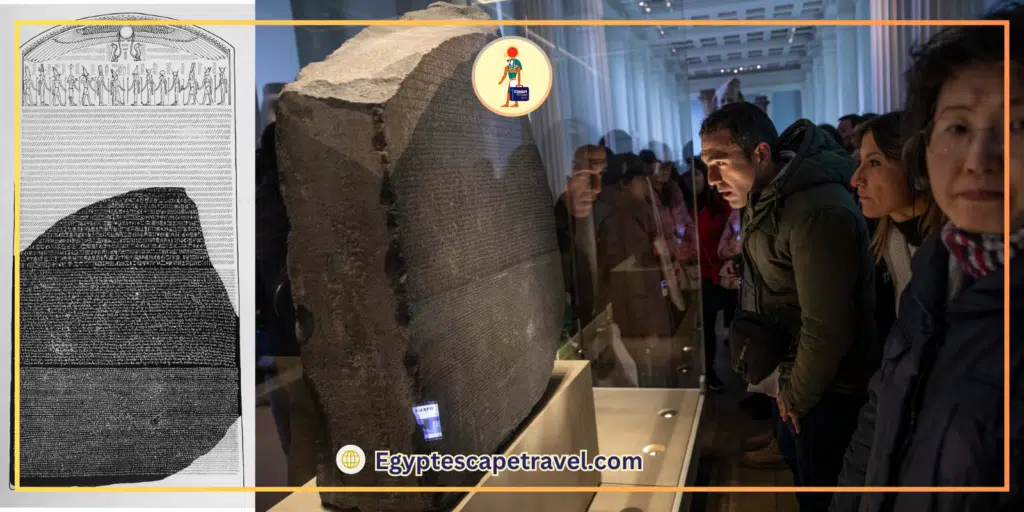
The Rosetta Stone is a dark granodiorite stele created in 196 BCE that served as the primary key to deciphering Ancient Egyptian hieroglyphs. For discerning travellers from Japan who value historical precision, structural order, and deep cultural appreciation, understanding this iconic artefact provides essential context for exploring the monuments of North Africa. Experiencing the temples and tombs of Cairo, Luxor, and Aswan alongside expert local guides ensures an enriching journey executed with absolute safety, punctuality, and genuine hospitality.
Before the discovery of the Rosetta Stone, the written language of the pharaohs had been silent for over 1,400 years. By unlocking this forgotten script, scholars restored the authentic voice of an ancient civilization. Integrating this historical knowledge into your private travel itinerary allows you to appreciate the master craftsmanship (Takumi) visible across Egypt’s greatest archaeological sites.
Rosetta Stone: What Is It and Why Is It Important?
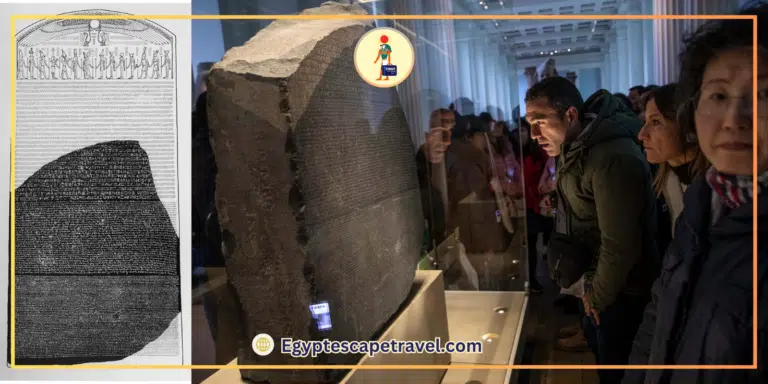
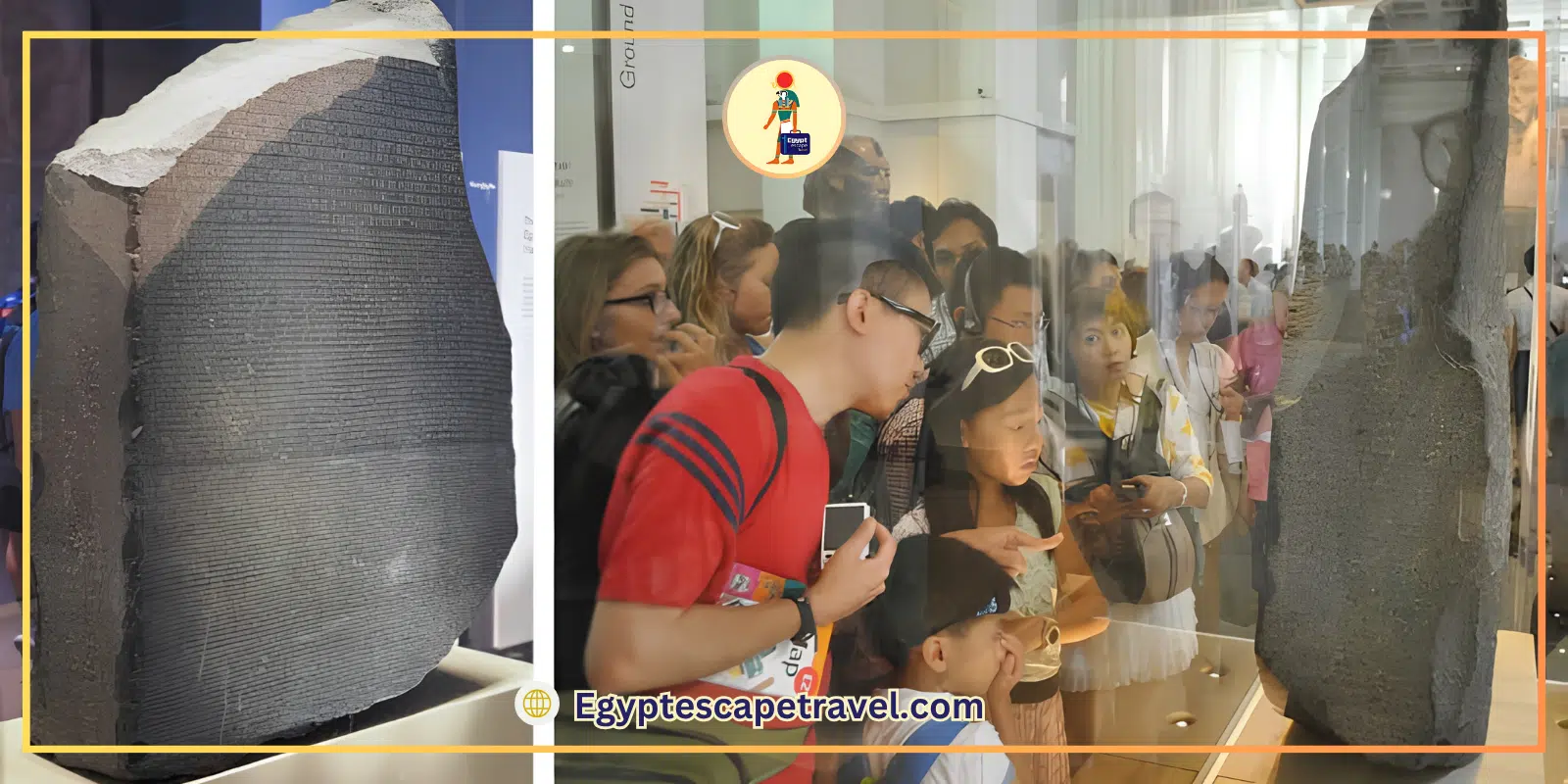
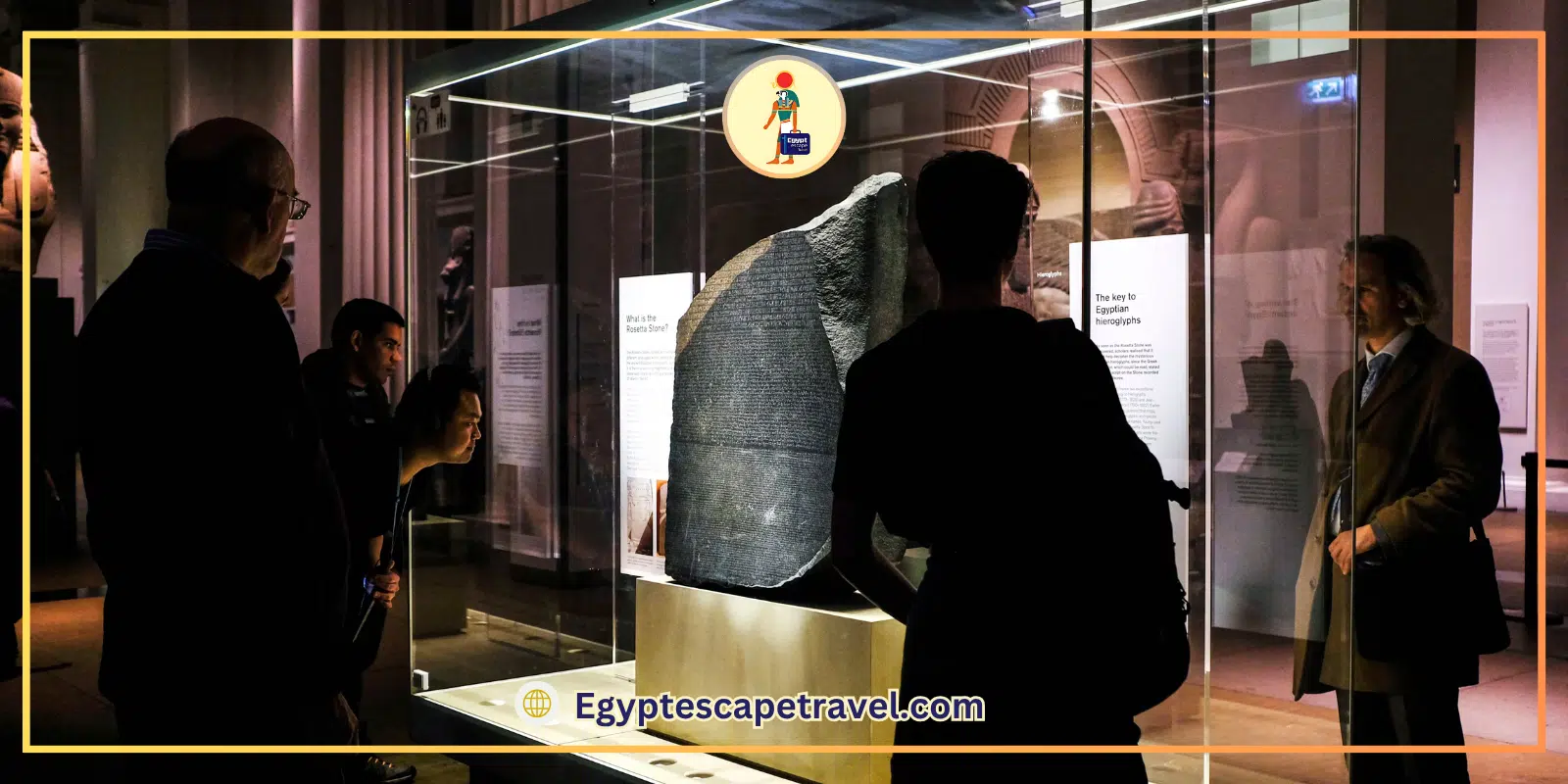
The Rosetta Stone is a dark granodiorite stone slab inscribed with an official royal decree issued at Memphis in 196 BCE during the reign of King Ptolemy V Epiphanes. It is historically important because it contained the exact same text written in three distinct writing scripts, allowing modern scholars to finally decipher Ancient Egyptian hieroglyphs after centuries of mystery.
Without this single artefact, modern historians would be unable to translate the wall inscriptions inside the Valley of the Kings, Karnak Temple, or the Grand Egyptian Museum. The decree itself was composed by a council of priests to honour King Ptolemy V, listing the tax exemptions, temple benefactions, and political honours granted during his reign.
Key physical specs and historical facts include:
- Material: Granodiorite, a dark volcanic rock characterized by a coarse-grained structure.
- Dimensions: Height of 114.4 cm, width of 72.3 cm, and thickness of 27.9 cm.
- Weight: Approximately 760 kg.
- Decree Date: March 27, 196 BCE, during the 18th Dynasty’s historical wake under Ptolemaic rule.
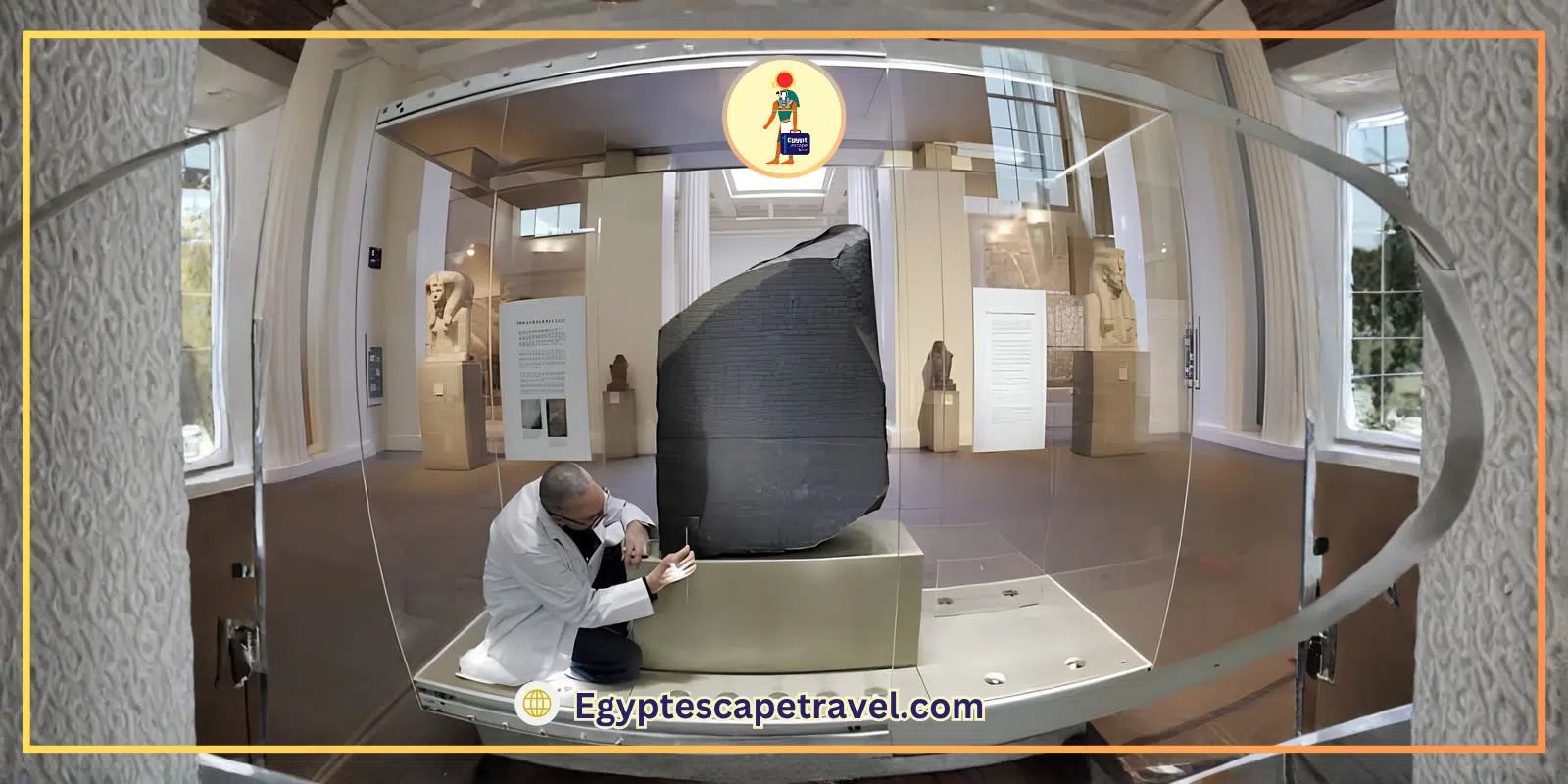
- Current Location: The British Museum in London, UK, where it has been displayed continuously since 1802.
Rosetta Stone: Decoding the Three Scripts of Ancient Egypt
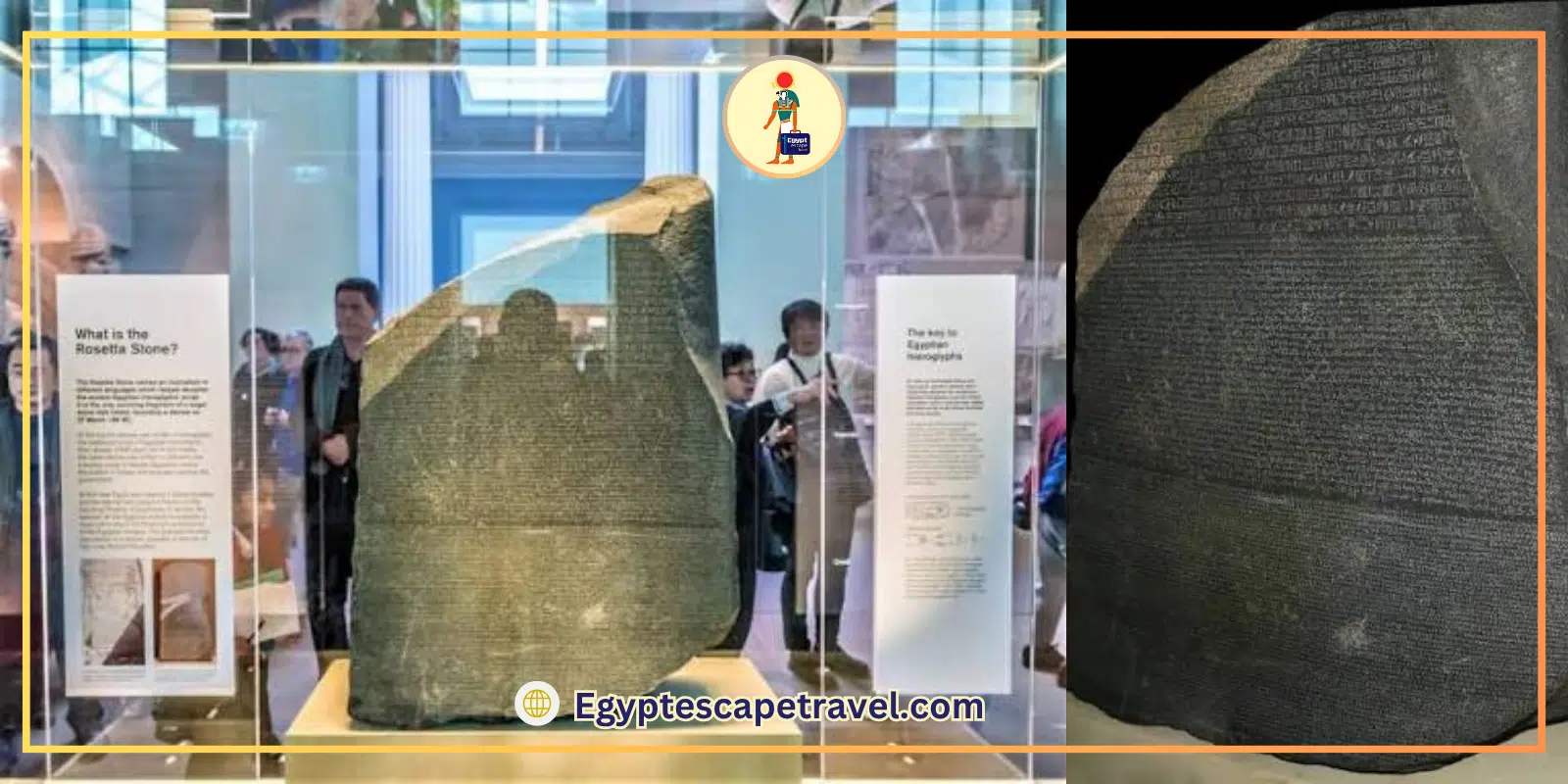
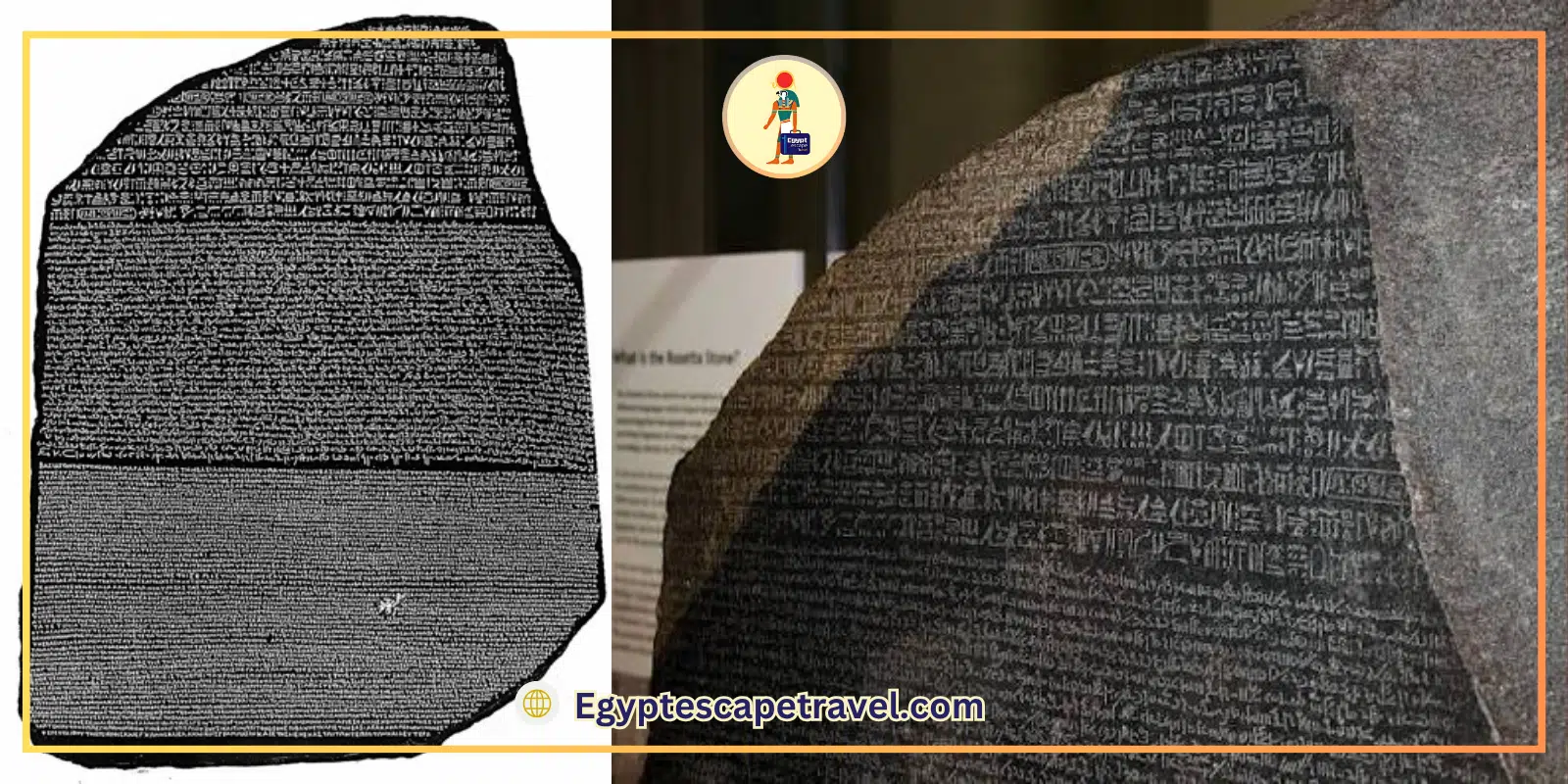
The Rosetta Stone features three distinct writing systems: Hieroglyphic, Demotic, and Ancient Greek, carved into its face to ensure that priests, government officials, and common citizens could all read the royal decree. This trilingual arrangement allowed linguists to use their existing knowledge of Ancient Greek to systematically decode the forgotten hieroglyphic symbols.
The three scripts served specific administrative and religious roles within Ptolemaic Egypt:
- Hieroglyphic Script: 14 incomplete lines of sacred picture-writing used exclusively for formal religious decrees, temple walls, and monumental inscriptions.
- Demotic Script: 32 lines of native Egyptian cursive writing used for daily commercial business, general administration, and popular literature.
- Ancient Greek Script: 54 lines of alphabetical text used by the ruling Greco-Macedonian court and government bureaucracy.
In 1822, French scholar Jean-François Champollion achieved his major decipherment breakthrough by studying the royal name ovals known as cartouches. By matching the Greek name Ptolemaios with its corresponding hieroglyphic symbols, Champollion isolated individual phonetic sounds and proved that hieroglyphs were not merely symbolic pictures, but a complex combination of phonetic and ideographic characters.
Rosetta Stone: Historical Timeline From Discovery to London
French military engineers under Napoleon Bonaparte discovered the Rosetta Stone in July 1799 during fortification work near the town of Rashid (Rosetta) in the Nile Delta. Following military defeat, French forces surrendered the artefact to the British army under the Treaty of Alexandria in 1801, leading to its permanent installation at the British Museum in 1802.
The chronological journey of the artifact highlights several key historical milestones:
- 196 BCE: The royal decree is carved onto granodiorite stelae and placed in temples across Egypt.
- July 1799: French soldiers rebuild Fort Julien in Rashid (Rosetta) and uncover the stone embedded inside a wall.
- 1801: British forces acquire the artefact following the surrender of French troops in Alexandria.
- 1802: The stone is transported to Portsmouth, England, and presented to the British Museum.
- 1822: Jean-François Champollion publishes his landmark decipherment letter, reopening the study of Ancient Egypt.
Rosetta Stone: Comparison of the Three Inscribed Scripts
Understanding how the texts on the Rosetta Stone compare helps clarify why decipherment took over two decades to complete. The table below breaks down the structural differences between each script preserved on the slab:
| Inscribed Script | Script Type | Primary Audience (196 BCE) | Preserved Lines | Historical Function |
| Hieroglyphic | Sacred / Pictographic & Phonetic | Priests, Royalty, & Deities | 14 Incomplete Lines | Monumental decrees & sacred temple walls |
| Demotic | Native Cursive / Alphabetic | Egyptian Citizens & Scribes | 32 Lines | Everyday business & local administration |
| Ancient Greek | Alphabet | Ptolemaic Rulers & Scholars | 54 Lines | Official state governance & international affairs |
Rosetta Stone: Luxury Travel Planning for Japanese Visitors
Experiencing the archaeological wonders unlocked by the Rosetta Stone requires careful travel planning, reliable transportation, and expert private guidance. For Japanese visitors who value physical comfort, strict safety standards, and intellectual depth, booking a custom private tour ensures an unhurried exploration of Cairo, Luxor, and Aswan.
When visiting major sites like the Giza Pyramids or the Grand Egyptian Museum, private tours provide distinct operational advantages:
- Licensed Japanese-Speaking Egyptologists: University-educated guides translate site reliefs and historical context directly into clear, respectful Japanese.
- Verified Private Transport: Modern, air-conditioned Toyota Hi-Ace vehicles driven by professional chauffeurs guarantee comfortable, punctual transit between hotel resorts and monuments.
- Customized Daily Scheduling: Flexible morning departures allow guests to explore ancient temples during cooler hours, avoiding public tour crowds.
Seeing the temple reliefs at Karnak or stepping inside the subterranean tombs of the Valley of the Kings becomes immensely more meaningful when you understand how the Rosetta Stone restored their history. Every carved hieroglyph tells a story that was brought back to life through modern scholarship.
Conclusion:
The Rosetta Stone stands as an enduring symbol of human curiosity and historical preservation. By bridging the gap between lost ancient languages and modern understanding, it allows travellers from around the globe to connect deeply with the artistic achievements of the pharaohs.
If you are ready to explore the magnificent monuments of Cairo, Luxor, and the Nile River with total peace of mind, let our dedicated local team design your bespoke itinerary. Contact our luxury travel specialists today to start planning your custom, stress-free Egyptian vacation!