Tutankhamun’s meteorite dagger: 1. A Cosmic Heritage That Captivates Japanese Travelers.
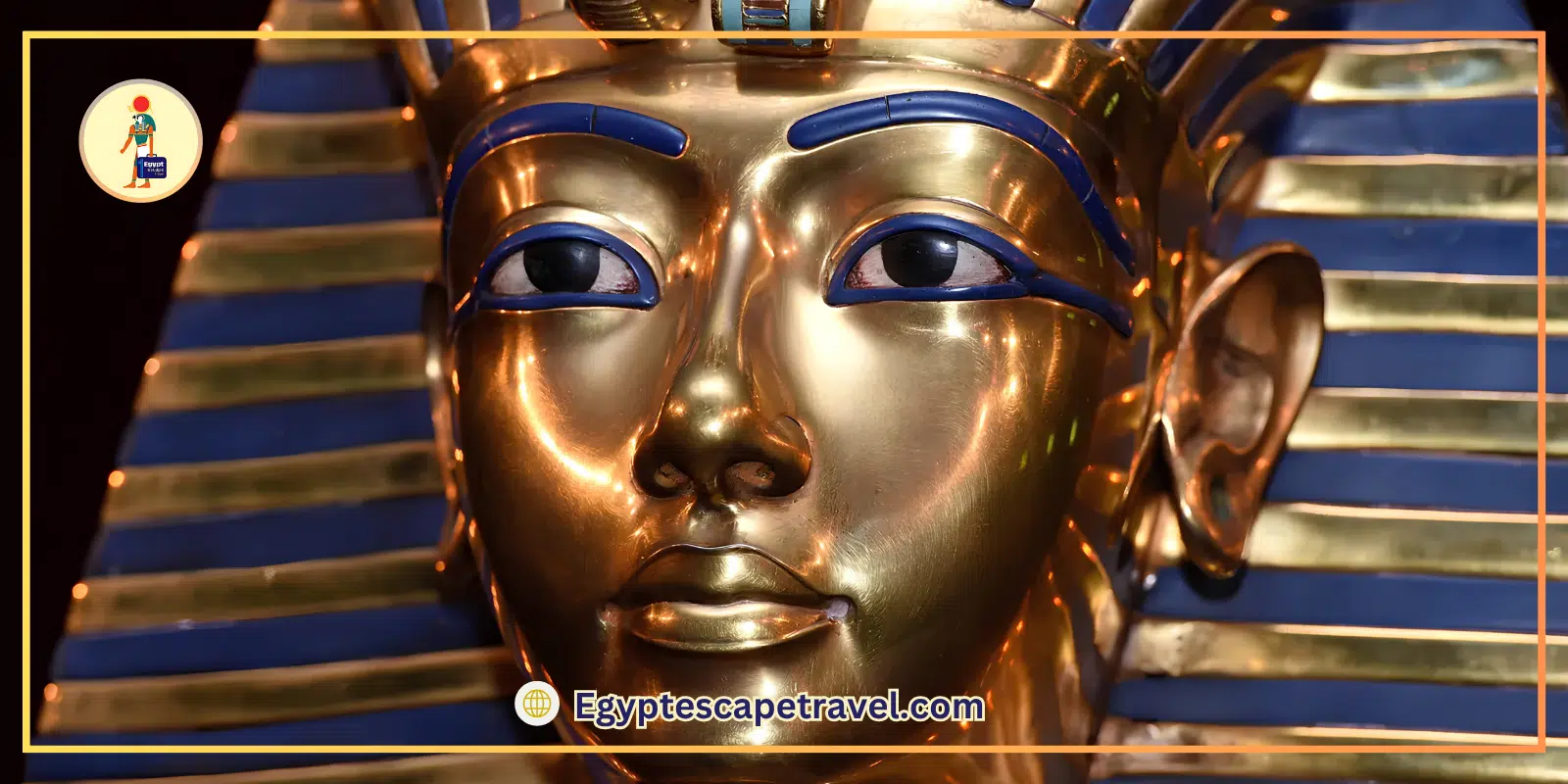
When Japanese tourists step inside the monumental halls of the Grand Egyptian Museum, they are often drawn to artefacts that reflect precision, spiritual depth, and extraordinary craftsmanship. Among the thousands of glittering treasures recovered from tomb KV62 in the Valley of the Kings, one weapon commands quiet, reverent awe: Tutankhamun’s meteorite dagger.
In Japanese culture, where traditional sword-smithing (Katana-kaji) is celebrated as both a high art form and a spiritual discipline, the existence of an ancient blade forged from space debris strikes a deeply resonant chord. Japanese visitors value Omotenashi (heartfelt hospitality), operational order, and intellectual depth when travelling abroad. Discovering how ancient Egyptian artisans mastered cosmic materials over 3,300 years ago provides a profound cultural bridge between the meticulous standards of modern Japan and the architectural brilliance of Pharaonic Egypt.
Tutankhamun’s meteorite dagger: 2. Howard Carter’s Historical 1925 Discovery in KV62
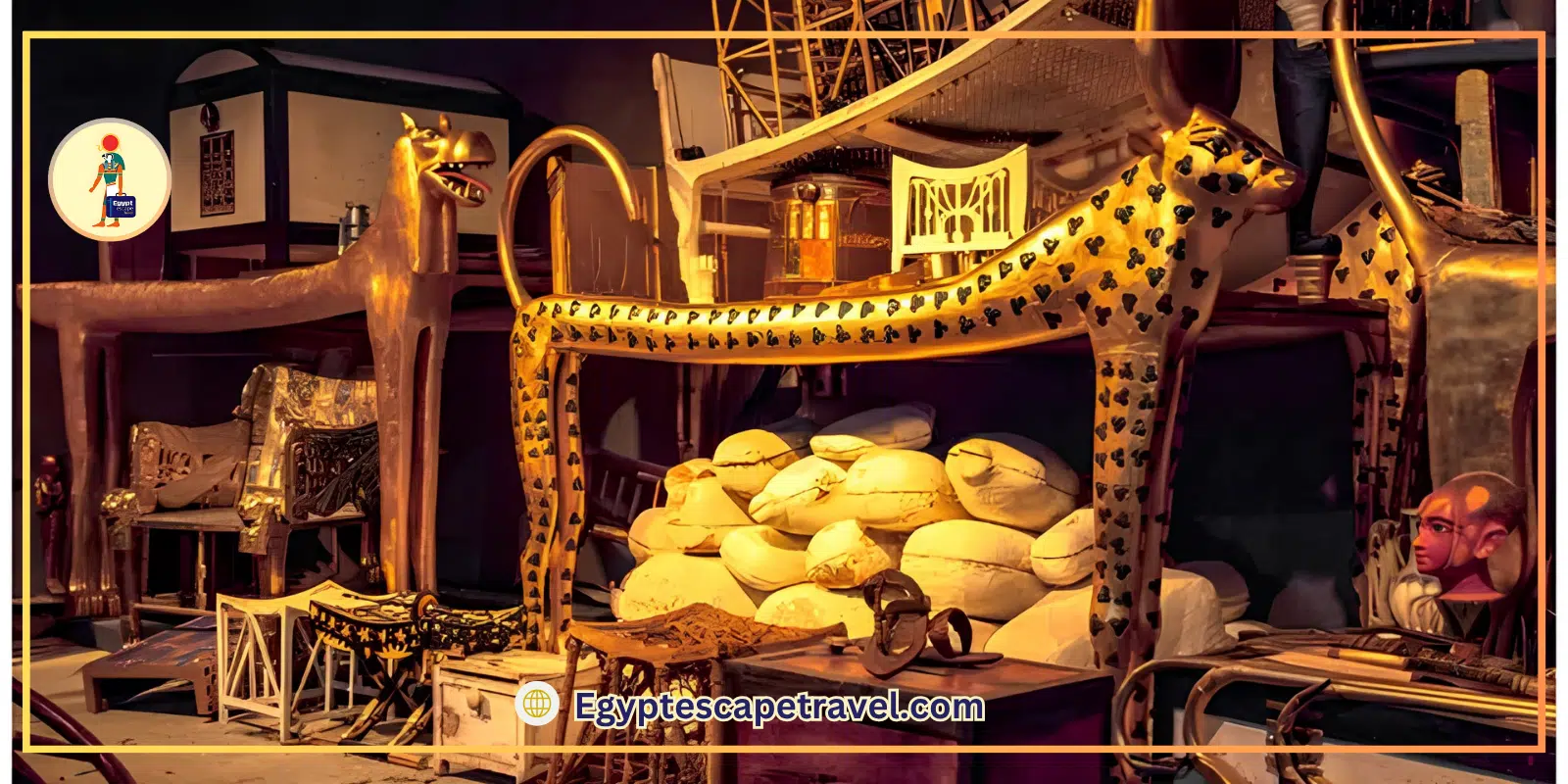
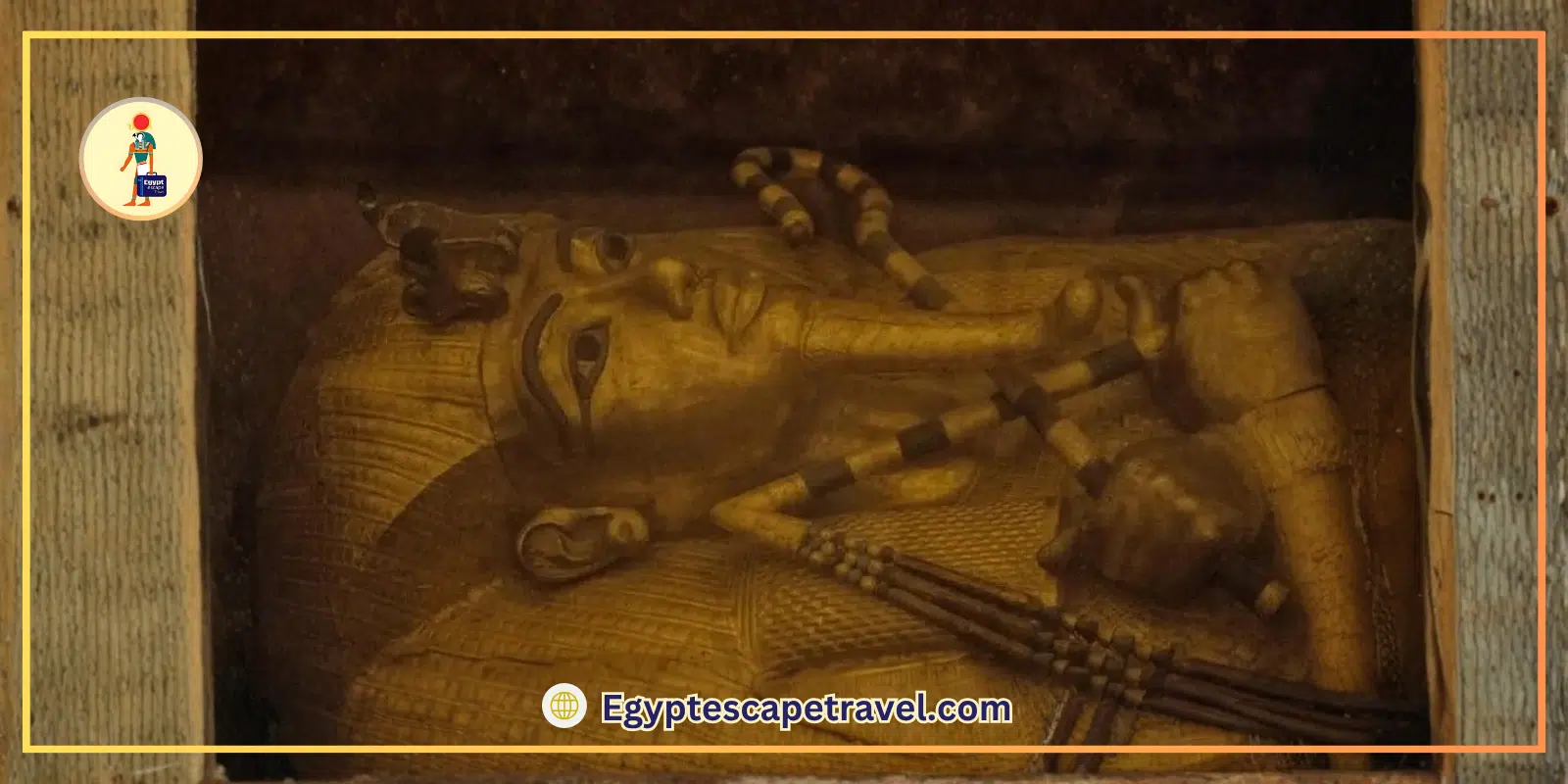
The story of this legendary weapon began during the landmark excavation of King Tutankhamun’s intact burial chamber. British archaeologist Howard Carter made world history in 1922 when he opened the tomb, but it was not until 1925 that he began the delicate, systematic process of unwrapping the young pharaoh’s mummified remains.
Nestled directly against the linen wrappings on the right thigh of the boy king, Carter uncovered a gleaming, unrusted iron blade resting securely inside a decorative gold sheath. Finding an iron weapon in a New Kingdom tomb immediately ignited intense scholarly debate. During the 18th Dynasty (circa 1332–1323 B.C.), Egypt was firmly grounded in the Bronze Age. Terrestrial iron smelting was virtually unknown across the Nile valley. The pristine condition and exceptional sharpness of the blade baffled early 20th-century archaeologists who could not explain how such advanced metallurgy existed centuries before the local Iron Age began.
Tutankhamun’s meteorite dagger: 3. Scientific Proof of Extraterrestrial Nickel and Cobalt
For nearly a century, historians speculated whether the iron was an early local anomaly or an imported luxury item. In 2016, an international team of Italian and Egyptian researchers utilized non-destructive X-ray fluorescence (XRF) spectrometry to analyze the chemical composition of the metal without inflicting any damage on the precious artefact.
The scientific results provided definitive proof: the blade contains high concentrations of nickel (nearly 11%) alongside trace amounts of cobalt. Earth-mined iron ore typically contains less than 4% nickel, whereas meteoritic iron-nickel alloys regularly display elevated nickel and cobalt levels. By comparing these chemical markers with known meteorites landed within a 2,000-kilometre radius of the Red Sea coast, scientists identified the “Kharga” meteorite—found 150 miles west of Alexandria—as a near-identical match in elemental composition.
Tutankhamun’s meteorite dagger: 4. The Value of Space Metal in the Ancient Bronze Age
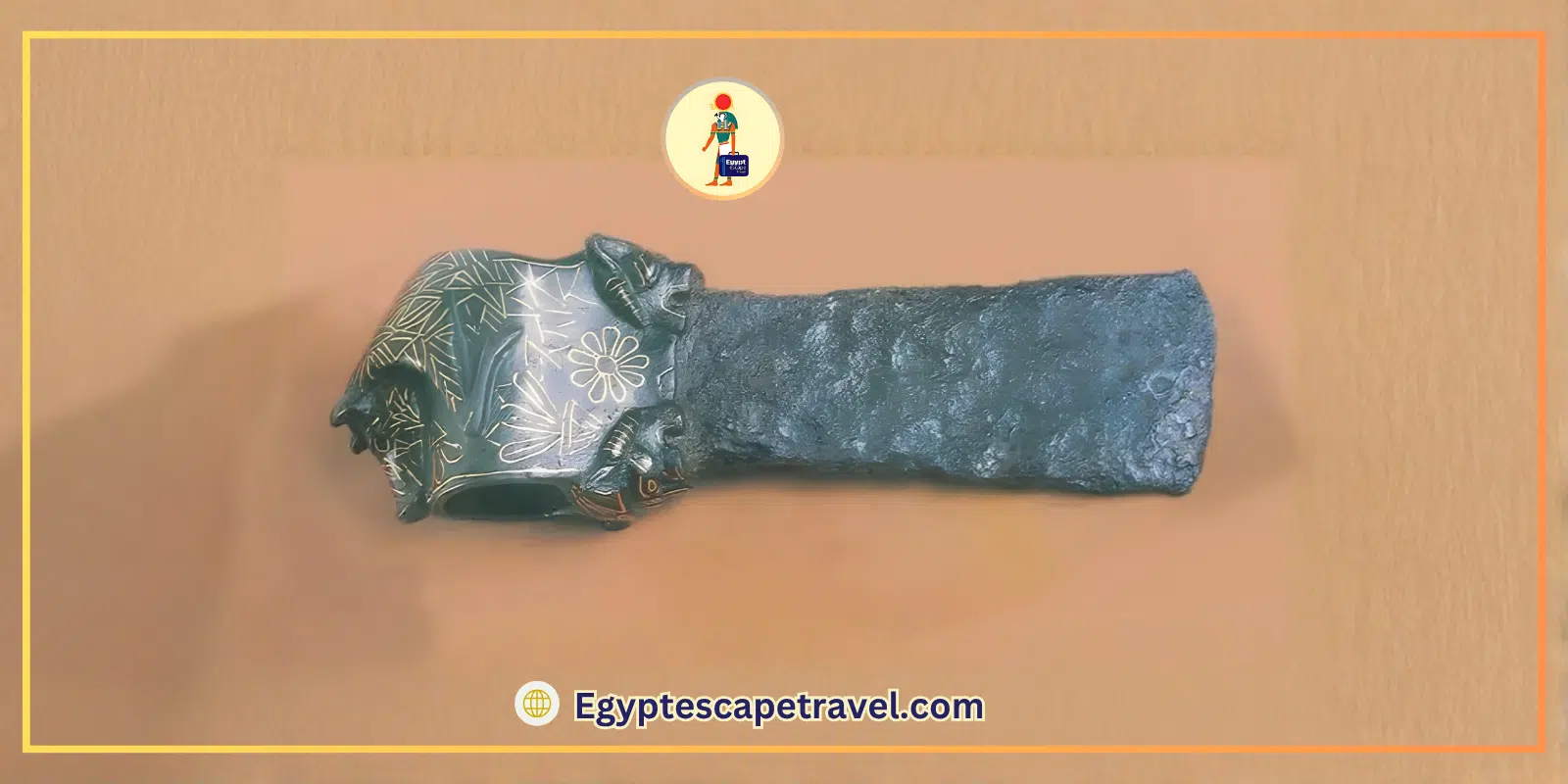
During the reign of Tutankhamun, iron fallen from the sky was considered infinitely more valuable than gold or silver. Because Egyptians lacked the high-temperature furnace technology required to extract iron from terrestrial rock, celestial meteorites were the sole source of this ultra-rare metal.
In ancient hieroglyphic texts dating from the 19th Dynasty onward, iron was explicitly referred to as ba-n-pet, which translates literally as “iron from heaven”. Placing an object forged from a fallen star directly onto the mummified body of the pharaoh was not merely a display of immense material wealth; it served as a divine talisman. The celestial metal was believed to protect the young king on his perilous journey through the underworld, connecting his earthly lineage directly with the cosmic power of the sky gods.
Tutankhamun’s meteorite dagger: 5. Japanese Breakthroughs in low-temperature heat forging
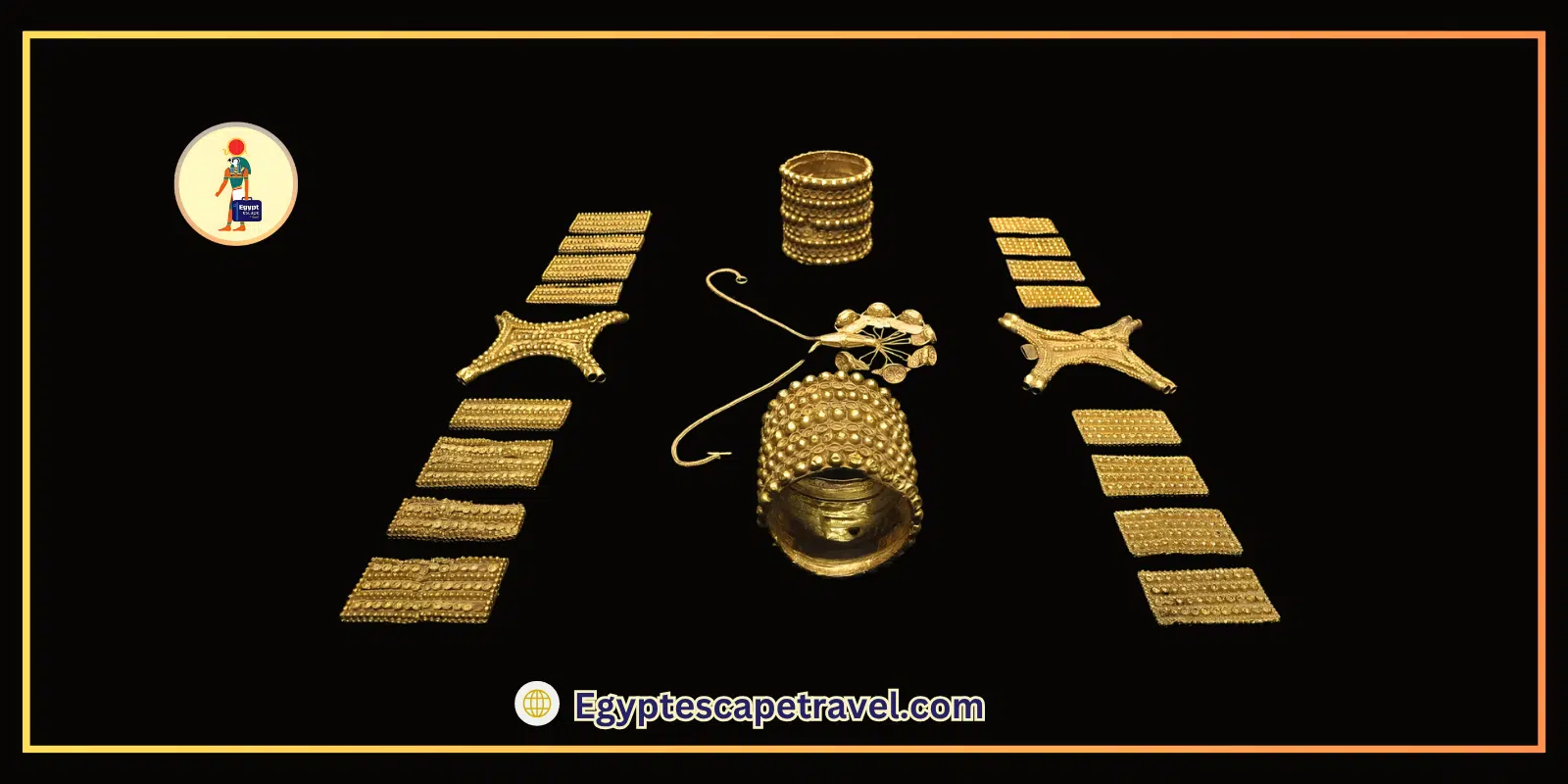
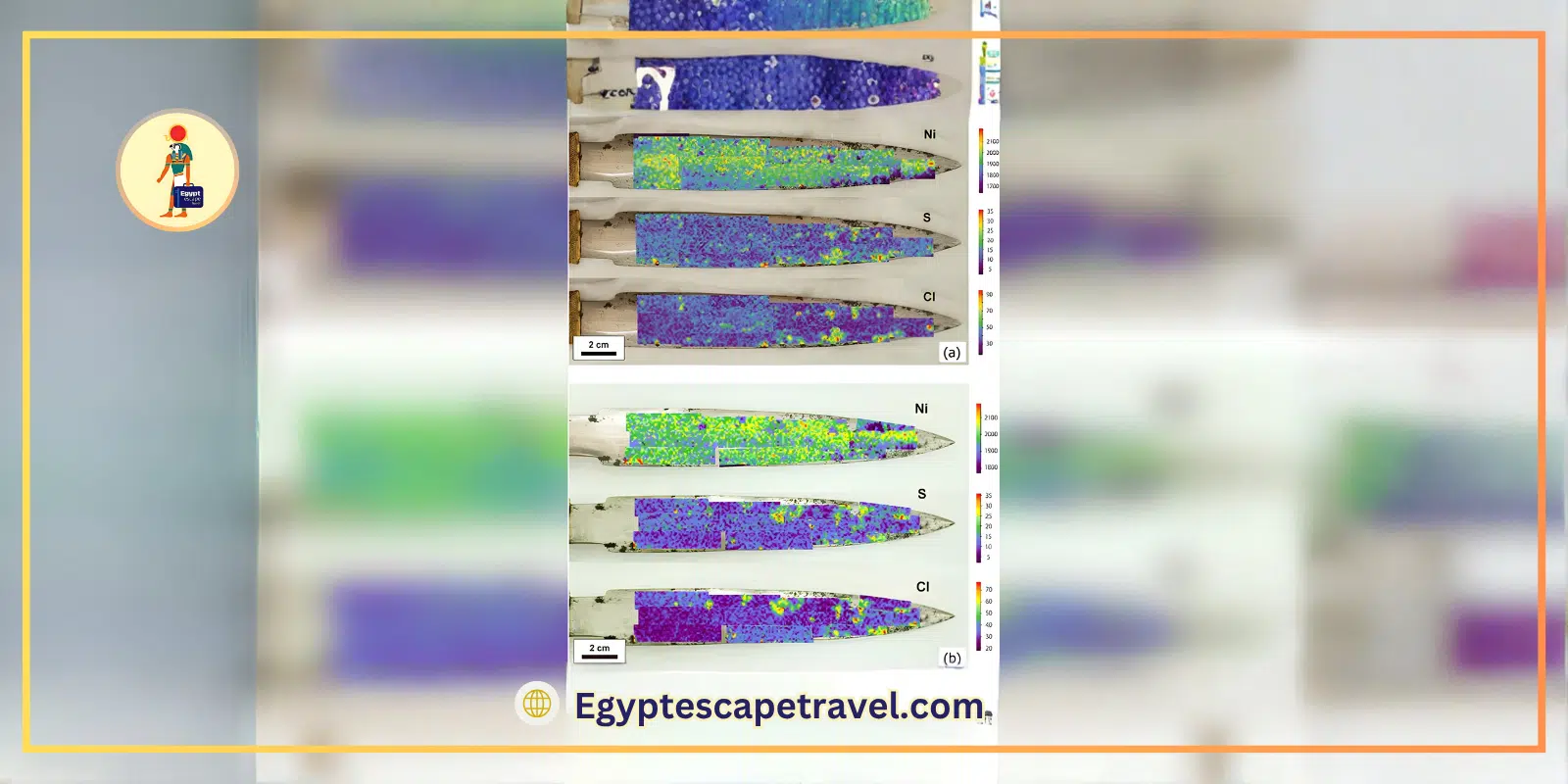
In recent years, researchers from Japan have played a pivotal role in solving the manufacturing mysteries behind this cosmic weapon. A research team led by Takafumi Matsui from the Planetary Exploration Research Centre at the Chiba Institute of Technology travelled to Cairo to perform advanced elemental mapping on the blade.
Their study revealed the presence of “Widmanstätten patterns”—distinctive, cross-hatched crystal structures formed inside iron-nickel meteorites over millions of years of extremely slow cooling in space. Because these patterns disappear if iron is heated above 927°C (1,700°F), the Japanese team proved that the ancient artisans forged the dagger using delicate, low-temperature heat forging at under 950°C. This scientific discovery highlighted an extraordinary level of temperature control and metallurgical mastery by ancient metalworkers.
Tutankhamun’s meteorite dagger: 6. Deciphering the Amarna Letters and Foreign Royal Gifts
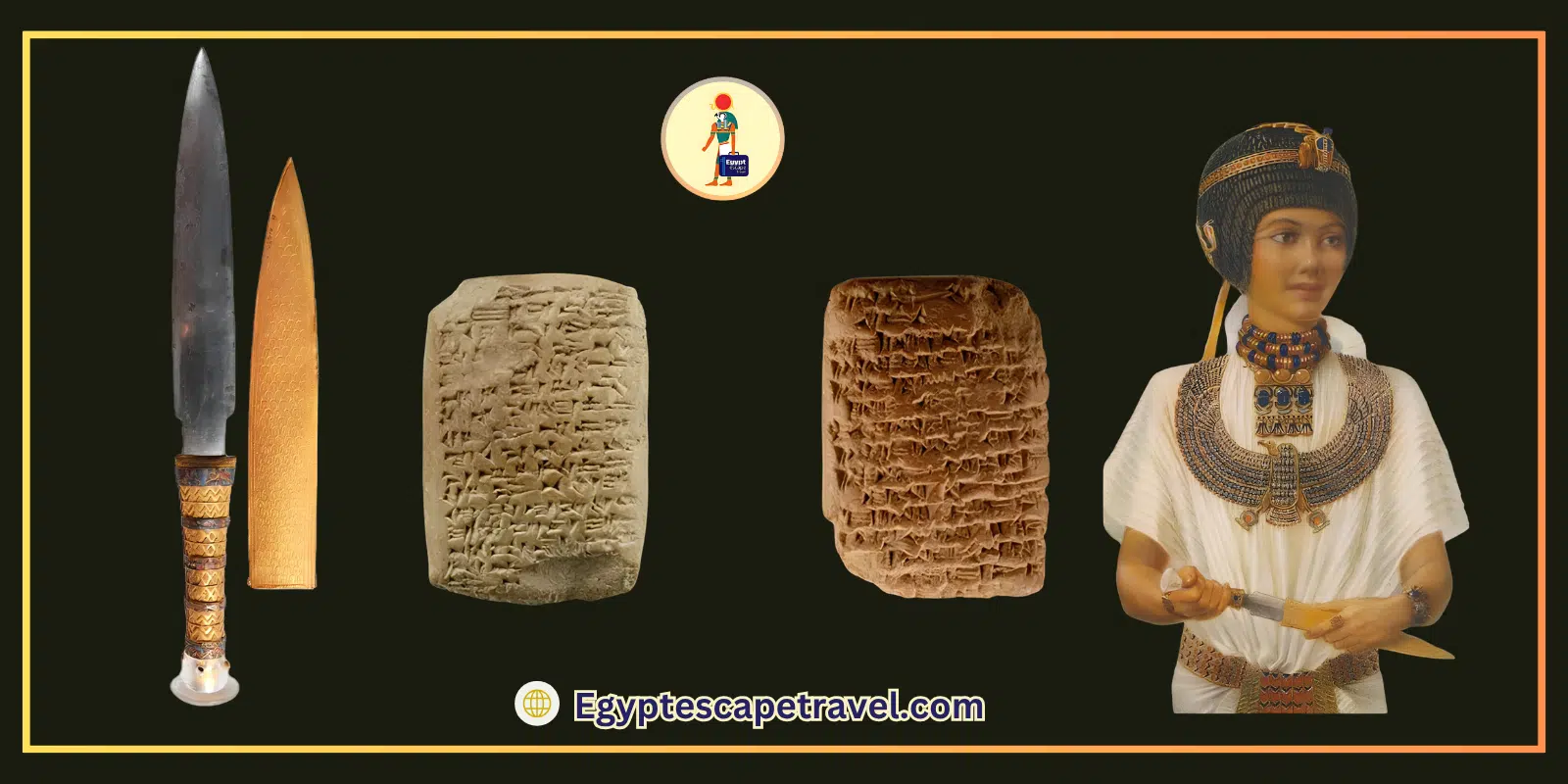
The origin of where the dagger was forged remains an exciting topic of global archaeological research. Japanese chemical analysis of the adhesive used on the dagger’s elaborate gold hilt revealed the presence of lime plaster rather than traditional Egyptian organic glue. During the 14th century B.C., lime plaster adhesives were extensively utilized in Anatolia (modern-day Turkey) and the Mitanni kingdom, but were virtually unused in Egypt.
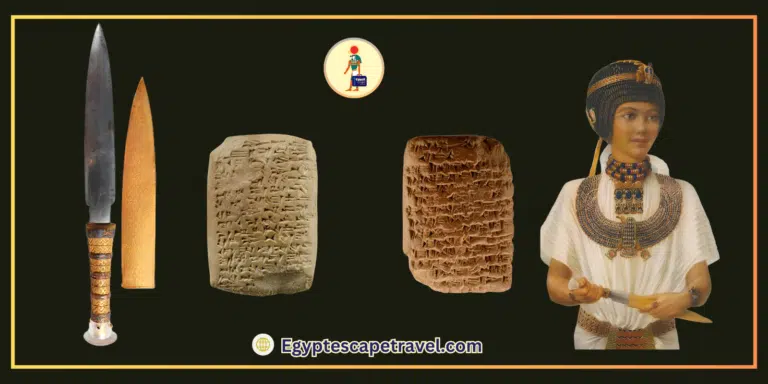
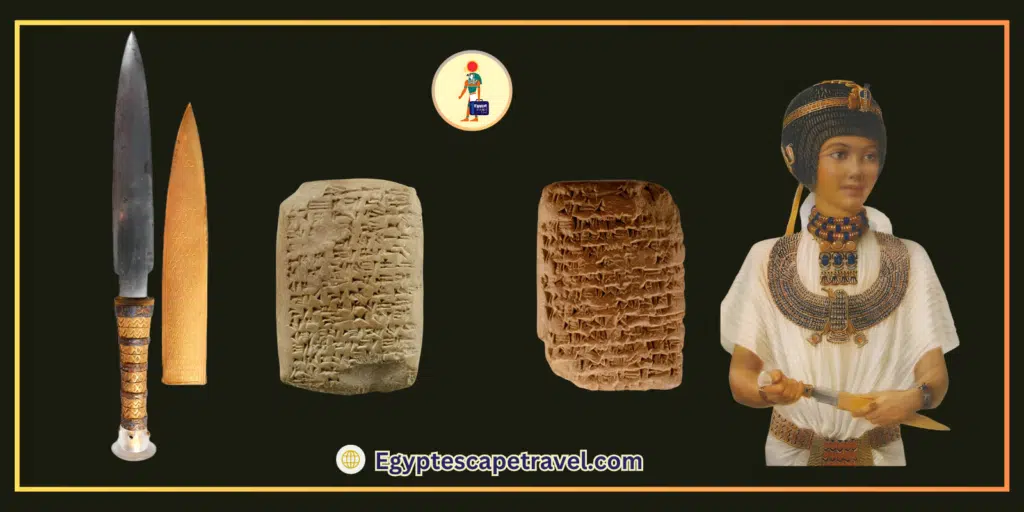
This technical detail strongly aligns with evidence from the Amarna Letters—a collection of 3,400-year-old diplomatic clay tablets discovered in Middle Egypt. One famous tablet records that King Tushratta of Mitanni sent a lavish array of diplomatic wedding gifts to King Tut’s grandfather, Amenhotep III. Among the catalogued items was an iron dagger featuring genuine lapis lazuli inlays and a decorated gold sheath. This suggests that the cosmic weapon may have been a prized family heirloom passed down to young Tutankhamun.
Tutankhamun’s meteorite dagger: 7. Exquisite Craftsmanship of the Hilt and Sheath
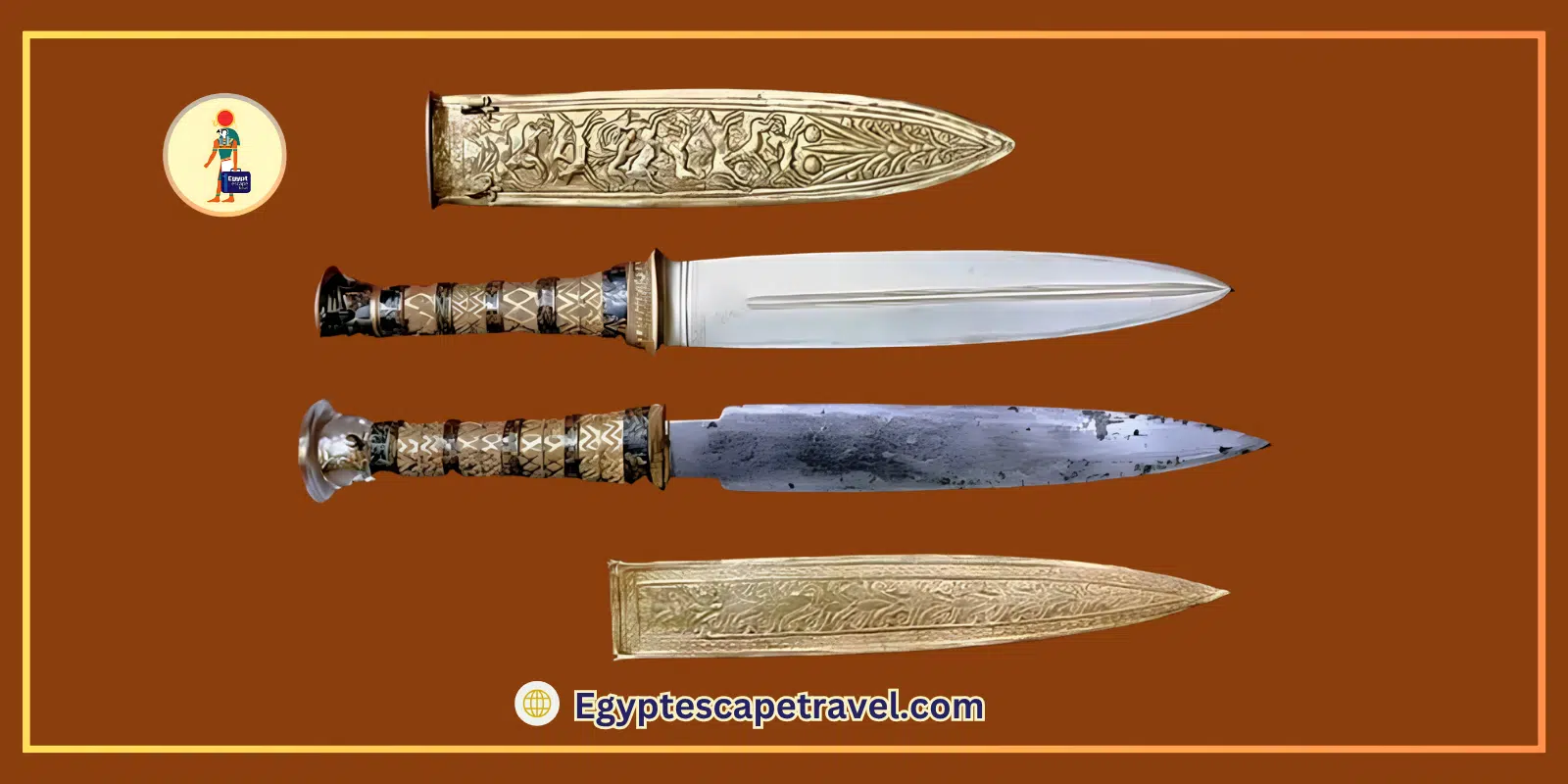
Beyond its extraordinary cosmic blade, the overall design of the dagger represents the absolute pinnacle of ancient luxury and artistic elegance. The entire weapon measures just over 30 centimetres in length, designed with exquisite balance and flawless visual harmony.
The hilt is fashioned from solid gold, decorated with intricate cloisonné work, delicate gold granulation, and precious stone inlays including lapis lazuli, carnelian, and malachite. The pommel at the top is crowned with a smooth, lustrous sphere of pure rock crystal. The accompanying gold sheath is equally breathtaking: one side displays an elaborate floral lily motif, while the reverse side features an intricate feather pattern terminating in the sculpted head of a jackal. For Japanese tourists who appreciate fine aesthetic details, viewing this physical masterpiece up close is an unforgettable highlight.
Tutankhamun’s meteorite dagger: 8. Strategic Itinerary Planning for Japanese Visitors
To fully appreciate the treasures of King Tutankhamun, Japanese travellers benefit from a well-structured itinerary that balances major historic landmarks with comfortable pacing. Navigating the 7-hour time difference between Tokyo and Cairo is easy when morning sightseeing is prioritized, taking advantage of natural early-morning alertness.
+——+———————————+——————————————+
| Day | Morning Sightseeing Focus | Afternoon & Evening Cultural Highlights |
+——+———————————+——————————————+
| Day 1| Arrival in Cairo & Check-in | Relaxing Nile River Dinner Cruise |
| Day 2| Giza Pyramids & Sphinx Tour | Grand Egyptian Museum Royal Treasures |
| Day 3| Flight to Luxor (East Bank) | Karnak Temple & Luxor Temple Guided Walk |
| Day 4| Valley of the Kings (KV62 Visit)| Boarding 5-Star Luxury Nile River Cruise |
+——+———————————+——————————————+
Starting your journey in Cairo allows you to view the royal artefacts firsthand before flying south to Luxor, where you can step inside the actual rock-cut tomb where Howard Carter uncovered the dagger over a century ago.
Tutankhamun’s meteorite dagger: 9. Ensuring Comfort and Peace of Mind in Egypt
Planning a luxury vacation to inspect Pharaonic antiquities requires reliable operational arrangements, top-tier safety measures, and seamless transportation. Japanese tourists place tremendous value on cleanliness, punctuality, and personal safety while exploring foreign destinations.
By booking private, customized tours, visitors enjoy dedicated climate-controlled Toyota Hi-Ace vehicles, expert local logistical coordination, and licensed Japanese-speaking Egyptologists. Having a private guide who speaks fluent Japanese ensures that every historical nuance—from hieroglyphic translations to complex chemical analyses of ancient metals—is communicated with absolute clarity. This level of personalized service allows travellers to explore ancient monuments, bustling bazaars, and world-class museum galleries with complete physical comfort and total peace of mind.
Tutankhamun’s meteorite dagger: 10. How to Experience This Celestial Treasure Today
Today, the complete collection of King Tutankhamun’s gold, jewellery, chariots, and weapons has been systematically relocated to state-of-the-art, climate-controlled galleries inside the Grand Egyptian Museum in Giza. Displayed in dedicated glass cases equipped with advanced lighting and preservation technology, visitors can observe the pristine meteoritic blade, the gold sheath, and the rock crystal pommel from inches away.
Standing in front of an authentic weapon forged from a fallen star over 33 centuries ago is an awe-inspiring, once-in-a-lifetime experience. It serves as a timeless reminder of human curiosity, artistic perfection, and the ancient Egyptian connection to the cosmos.
Are you ready to witness the magical treasures of King Tutankhamun and explore the wonders of the Nile Valley in luxury? Start planning your custom, stress-free Egyptian tour today, and prepare for a journey that will inspire you for a lifetime!